



Data Art si focalizza sulla mostra CORALE che inaugura FRENCH PLACE, organizzazione artistica e un incubatore di pratiche contemporanee
Ci sono spazi che nascono come luoghi espositivi e altri che, fin dall’inizio, si configurano come sistemi. CORALE, mostra inaugurale di FRENCH PLACE a Milano, appartiene chiaramente alla seconda categoria. Non è solo una mostra collettiva, né soltanto una dichiarazione curatoriale: è la manifestazione visibile di un modello organizzativo, relazionale e culturale che dialoga in modo diretto con le questioni centrali della Data Art contemporanea.
Fino al 28 febbraio 2026, lo spazio di via Carlo Goldoni diventa un campo di risonanza in cui opere, pratiche, tempi e soggettività convivono senza gerarchie risolutive. Ma per comprendere davvero CORALE, è necessario guardare oltre le opere e interrogare l’infrastruttura che le rende possibili.
FRENCH PLACE come proto-istituzione
FRENCH PLACE si definisce come un’organizzazione artistica e un incubatore di pratiche contemporanee critiche. Questa definizione, apparentemente neutra, è in realtà una presa di posizione netta. Operare come proto-istituzione, collocata tra una fondazione d’arte e una galleria, significa rifiutare sia la neutralità del white cube sia la logica puramente estrattiva del mercato.
Nel linguaggio della Data Art, potremmo dire che FRENCH PLACE non è una piattaforma di distribuzione, ma un ambiente operativo: un sistema che produce valore non solo attraverso l’output finale (le mostre), ma attraverso i processi, le relazioni, le temporalità che attiva.
Nato come spazio indipendente a Londra, al numero 9 di French Place, il progetto ha costruito nel tempo una comunità fondata sulla curiosità e su una responsabilità culturale condivisa. Artisti, gallerie e pubblici non come nodi separati, ma come parti interdipendenti di una rete. Con la crescita del programma, questa rete ha richiesto una struttura capace di accompagnarne l’evoluzione, senza irrigidirla.
L’apertura a Milano non è quindi una semplice espansione geografica, ma un passaggio di fase. Il nome resta, come traccia mnemonica e come segnale di continuità: l’identità del progetto non è legata a un brand astratto, ma alle persone e ai luoghi che lo attraversano. Un principio profondamente anti-algoritmico, in un’epoca che tende a separare contenuto e contesto.
Verso modelli circolari non estrattivi
Uno degli aspetti più radicali di FRENCH PLACE è il suo modello operativo circolare: i proventi della galleria sostengono il public programme, le residenze, il mentoring, la ricerca. In altre parole, il sistema reinveste su sé stesso. Non accumula dati per monetizzarli altrove, ma li rimette in circolo sotto forma di tempo, spazio e fiducia.
Per chi osserva il mondo dell’arte attraverso la lente dei dati e degli algoritmi, questo modello rappresenta una contro-narrazione potente. Dove molte piattaforme culturali funzionano per estrazione – visibilità in cambio di valore simbolico – FRENCH PLACE lavora per rigenerazione. È un ecosistema più che un archivio.
Una mostra che è dispositivo di ascolto
Dentro questa infrastruttura prende forma CORALE. Il titolo non rimanda a un’unità armonica, ma a una polifonia mantenuta in tensione. In italiano, corale significa collettivo, condiviso, unanime senza essere uniforme. Uno scarto semantico intraducibile che diventa metodo.
La mostra si ispira a When I Sing, the Mountains Dance di When I Sing, the Mountains Dance di Irene Solà, romanzo costruito come una costellazione di voci umane e non umane. Una struttura che ricorda da vicino i sistemi distribuiti: nessun centro dominante, ma una coerenza emergente che nasce dalla prossimità e dalla dissonanza.
Il riferimento al right to opacity di Édouard Glissant diventa qui cruciale. In un mondo governato da algoritmi che chiedono leggibilità totale, CORALE rivendica l’opacità come condizione di relazione. Non tutto deve essere decifrato per poter agire insieme. Un principio che dialoga profondamente con la critica ai bias, alla standardizzazione e alla violenza simbolica insita nei sistemi tecnologici contemporanei.
Gli artisti: espressioni agli antipodi, risonanze comuni.
Gli artisti riuniti in CORALE non condividono un linguaggio, un medium o un’estetica. Condividono piuttosto una risonanza critica.
Xolo Cuintle
Lavora su immaginari ibridi, spesso attraversati da mitologie e stratificazioni culturali. Le sue opere funzionano come archivi instabili: non restituiscono una storia lineare, ma un insieme di tracce che resistono alla classificazione. Un approccio che richiama la logica dei database incompleti, dove l’assenza è parte del sistema.
Nina Davies
Indaga il corpo come interfaccia politica. Le sue pratiche mettono in crisi l’idea di visibilità totale, mostrando come l’esposizione sia sempre una negoziazione. In un’epoca di biometriche e sorveglianza algoritmica, il suo lavoro introduce una frizione necessaria.
Anna De Castro Barbosa
Opera su temporalità stratificate, spesso legate a memorie collettive e processi di sedimentazione storica. Il dato, qui, è tempo: accumulo, erosione, latenza. Le sue opere sembrano funzionare come algoritmi lenti, incapaci – volutamente – di restituire output immediati.
Francesca Frigerio
Il suo lavoro si muove tra materia, gesto e ripetizione. C’è una qualità quasi procedurale nelle sue pratiche, come se ogni opera fosse l’esecuzione di un protocollo aperto, soggetto a variazioni e deviazioni. Una poetica dell’errore che dialoga con l’idea di imperfect solidarities.
Steph Huang
Affronta le politiche dell’identità e della rappresentazione attraverso linguaggi che riflettono la frammentazione dell’esperienza digitale. Le sue opere sembrano consapevoli dei bias che abitano ogni sistema di visione, umano o algoritmico.
Cecilia Mentasti
Lavora sul confine tra visibile e invisibile, spesso attraverso installazioni che richiedono un’attenzione rallentata. In termini di Data Art, il suo lavoro parla di rumore: ciò che normalmente viene scartato dai sistemi di lettura, ma che contiene informazioni decisive.
Mountaincutters
Collettivo che mette al centro la dimensione collaborativa come pratica artistica. Il loro lavoro è un esempio concreto di produzione distribuita: nessuna firma dominante, nessuna autorità centrale. Una struttura che riecheggia i modelli peer-to-peer.
Matthias Odin
La sua residenza inaugura il programma di FRENCH PLACE mettendo il processo al centro. Odin lavora spesso su cicli di ricerca che evolvono nel tempo, producendo opere come output temporanei di un sistema più ampio. Un approccio affine al versioning del software.
Marco Siciliano
Indaga la relazione tra immagine, tecnologia e potere. Le sue opere sembrano interrogare i dispositivi stessi della visione, come se ogni immagine fosse anche un’analisi del proprio algoritmo di produzione.
Riley Tu
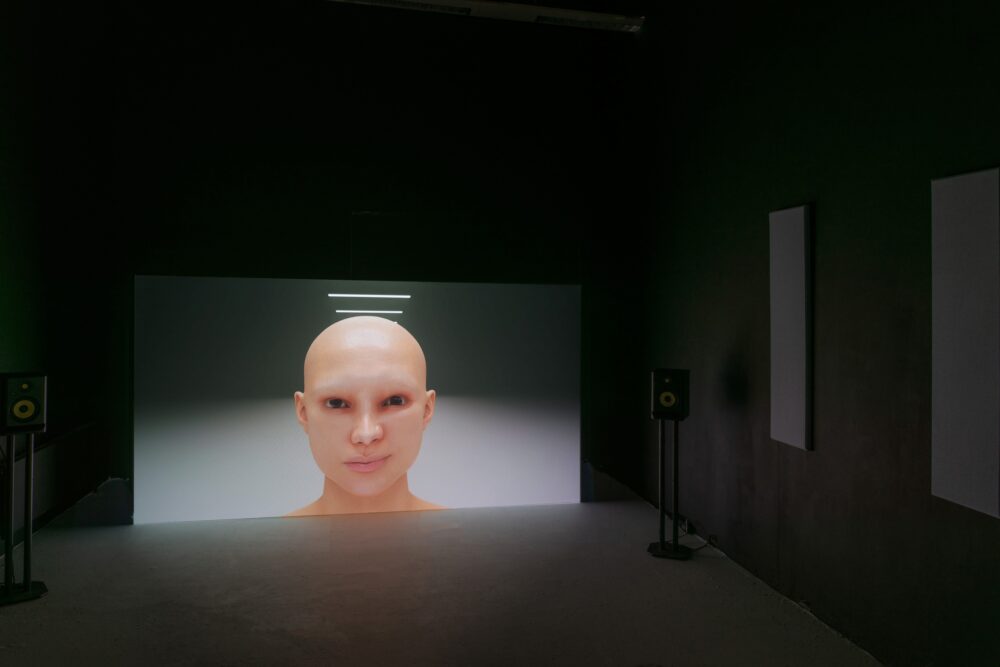
Protagonista anche del programma video, esplora l’autorappresentazione e la resistenza algoritmica negli spazi digitali. Qui il corpo diventa un campo di battaglia tra standardizzazione e deviazione, tra leggibilità e opacità.
Gaspar Willmann
Lavora su tensioni formali che riflettono conflitti più ampi: economici, sociali, simbolici. Le sue opere funzionano come modelli compressi di sistemi complessi, dove ogni elemento è in relazione con gli altri.
Rafał Zajko
La sua pratica affronta spesso le infrastrutture – visibili e invisibili – che regolano il nostro presente. Un lavoro che dialoga direttamente con il pensiero dei dati come infrastruttura culturale, non neutrale.
Luis Enrique Zela-Koort
Indaga le dinamiche post-coloniali e le asimmetrie di potere attraverso pratiche che rifiutano la semplificazione. Il suo lavoro incarna l’idea che non tutto debba essere tradotto per essere condiviso.
Insieme, non formano un coro all’unisono, ma un sistema relazionale in cui le differenze non vengono risolte, bensì mantenute operative.
Oltre le metriche della vanità
CORALE è una mostra profondamente congruente a Data Art, pur senza ricorrere a dashboard, grafici o intelligenze artificiali esplicite. Qui il dato è relazione, tempo, corpo, storia. È informazione non normalizzata. È ciò che sfugge all’ottimizzazione.
FRENCH PLACE, come infrastruttura culturale, rende visibile un’alternativa possibile: uno spazio in cui arte, ricerca e comunità funzionano come un sistema aperto, non come una macchina predittiva. Un luogo in cui l’assenza di una lettura univoca non è una mancanza, ma una condizione di libertà.
In questo senso, CORALE non è solo una mostra inaugurale. È un manifesto operativo. Un invito a ripensare il modo in cui produciamo, condividiamo e abitiamo i sistemi culturali nell’era dei dati. Non cantando tutti la stessa nota, ma accettando, finalmente, di vibrare insieme.
***
CORALE: When Collectivity Becomes Infrastructure
There are spaces that come into being as exhibition venues, and others that, from the outset, take shape as systems. CORALE, the inaugural exhibition of FRENCH PLACE in Milan, clearly belongs to the latter category. It is not merely a group show, nor simply a curatorial statement: it is the visible manifestation of an organisational, relational and cultural model that engages directly with the central questions of contemporary Data Art.
From 29 January to 28 February 2026, the space on Via Carlo Goldoni becomes a field of resonance in which works, practices, temporalities and subjectivities coexist without resolving hierarchies. Yet to truly understand CORALE, one must look beyond the artworks themselves and interrogate the infrastructure that makes them possible.
FRENCH PLACE as a proto-institution
FRENCH PLACE defines itself as an artistic organisation and an incubator of critical contemporary practices. This apparently neutral definition is, in fact, a clear position. To operate as a proto-institution—situated between an art foundation and a gallery means rejecting both the neutrality of the white cube and the purely extractive logic of the market.
In the language of Data Art, FRENCH PLACE is not a distribution platform but an operational environment: a system that generates value not only through its final outputs (the exhibitions), but through the processes, relationships and temporalities it activates.
Founded as an independent space in London, at number 9 French Place, the project has gradually built a community rooted in curiosity and shared cultural responsibility. Artists, galleries and audiences are conceived not as separate nodes, but as interdependent parts of a network. As the programme expanded, this network required a structure capable of accompanying its evolution without rigidifying it.
The opening in Milan is therefore not a simple geographical expansion, but a shift in phase. The name remains as a mnemonic trace and a sign of continuity: the project’s identity is not tied to an abstract brand, but to the people and places that pass through it. A profoundly anti-algorithmic principle in an era that tends to separate content from context.
Towards non-extractive circular models
One of the most radical aspects of FRENCH PLACE is its circular operational model: the gallery’s proceeds support the public programme, artist residencies, mentoring and research. In other words, the system reinvests in itself. It does not accumulate data to monetise elsewhere, but recirculates value in the form of time, space and trust.
For those who observe the art world through the lens of data and algorithms, this model represents a powerful counter-narrative. Where many cultural platforms operate through extraction—visibility in exchange for symbolic value, FRENCH PLACE works through regeneration. It is an ecosystem rather than an archive.
An exhibition as a listening device
Within this infrastructure, CORALE takes shape. The title does not refer to a resolved harmonic unity, but to a polyphony held in tension. In Italian, corale signifies something collective, shared, unanimous without being uniform. An untranslatable semantic gap that becomes method.
The exhibition draws inspiration from When I Sing, the Mountains Dance by Irene Solà, a novel structured as a constellation of human and non-human voices. A structure that closely recalls distributed systems: no dominant centre, but an emergent coherence born from proximity and dissonance.
The reference to Édouard Glissant’s right to opacity becomes crucial here. In a world governed by algorithms that demand total legibility, CORALE claims opacity as a condition of relation. Not everything needs to be deciphered in order to act together. A principle that resonates deeply with critiques of bias, standardisation and the symbolic violence embedded in contemporary technological systems.
The artists: divergent expressions, shared resonances
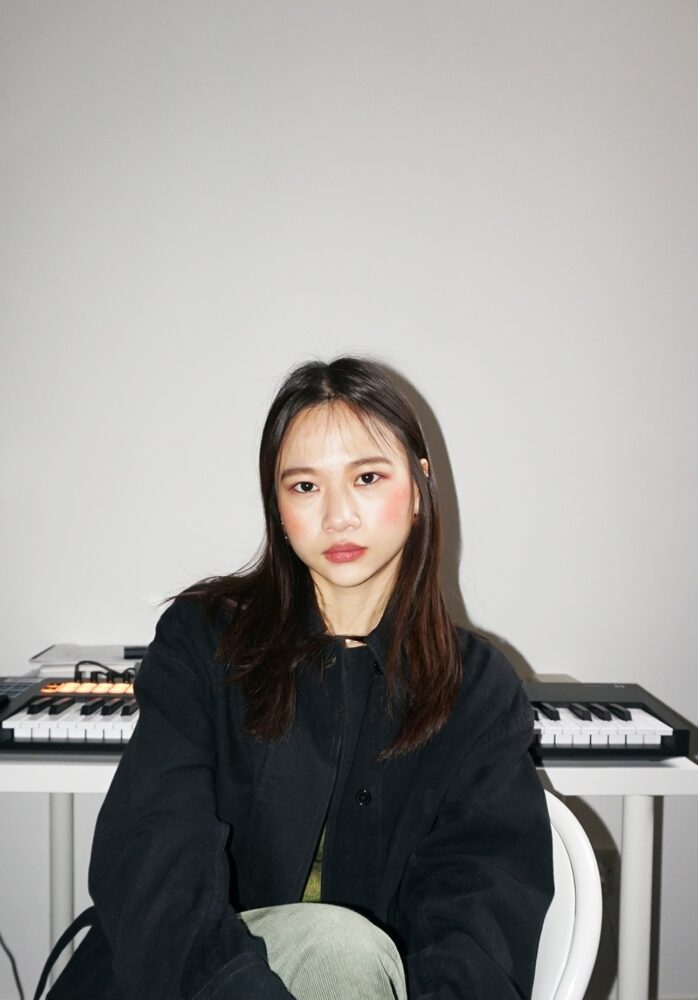
The artists brought together in CORALE do not share a language, a medium or an aesthetic. What they share is a critical resonance.
Xolo Cuintle
Works with hybrid imaginaries, often traversed by mythologies and cultural stratifications. His works function as unstable archives: they do not return a linear narrative, but a set of traces that resist classification, recalling the logic of incomplete databases, where absence is part of the system.
Nina Davies
Investigates the body as a political interface. Her practices challenge the idea of total visibility, showing how exposure is always a negotiation. In an age of biometrics and algorithmic surveillance, her work introduces a necessary friction.
Anna De Castro Barbosa
Operates on stratified temporalities, often linked to collective memory and processes of historical sedimentation. Here, data is time: accumulation, erosion, latency. Her works function like slow algorithms, deliberately incapable of delivering immediate outputs.
Francesca Frigerio
Moves between matter, gesture and repetition. There is an almost procedural quality to her practice, as if each work were the execution of an open protocol, subject to variation and deviation. A poetics of error that dialogues with the idea of imperfect solidarities.
Steph Huang
Addresses the politics of identity and representation through languages that reflect the fragmentation of digital experience. Her works appear acutely aware of the biases inhabiting every system of vision, human or algorithmic.
Cecilia Mentasti
Works on the threshold between the visible and the invisible, often through installations that demand slowed attention. In Data Art terms, her work speaks of noise: what is usually discarded by reading systems, yet contains decisive information.
Mountaincutters
A collective that places collaboration at the centre of artistic practice. Their work is a concrete example of distributed production: no dominant signature, no central authority, a structure that echoes peer-to-peer models.
Matthias Odin
His residency inaugurates FRENCH PLACE’s programme by placing process at its core. Odin often works through research cycles that evolve over time, producing works as temporary outputs of a broader system, an approach akin to software versioning.
Marco Siciliano
Investigates the relationship between image, technology and power. His works seem to interrogate the very devices of vision, as if each image were also an analysis of its own production algorithm.
Riley Tu
Also central to the video programme, explores self-representation and algorithmic resistance within digital spaces. Here the body becomes a battleground between standardisation and deviation, between legibility and opacity.
Gaspar Willmann
Works with formal tensions that reflect broader conflicts, economic, social, symbolic. His works function as compressed models of complex systems, where each element is in relation to the others.
Rafał Zajko
Often addresses the infrastructures (visible and invisible) that regulate our present. A practice that speaks directly to thinking about data as a cultural infrastructure, never neutral.
Luis Enrique Zela-Koort
Investigates post-colonial dynamics and power asymmetries through practices that refuse simplification. His work embodies the idea that not everything needs to be translated in order to be shared.
Together, they do not form a chorus in unison, but a relational system in which differences are not resolved, but kept operative.
Beyond vanity metrics
CORALE is deeply aligned with Data Art, despite making no explicit use of dashboards, charts or artificial intelligence. Here, data is relation, time, body, history. It is non-normalised information, what escapes optimisation.
FRENCH PLACE, as a cultural infrastructure, makes a possible alternative visible: a space in which art, research and community function as an open system rather than a predictive machine. A place where the absence of a single, imposed reading is not a lack, but a condition of freedom.
In this sense, CORALE is not only an inaugural exhibition. It is an operational manifesto, an invitation to rethink how we produce, share and inhabit cultural systems in the age of data. Not by singing the same note, but by finally accepting to vibrate together.