






Tra industria e trasformazione: osservatorio del cinema contemporaneo
Ogni anno Cannes produce almeno due festival paralleli.
Il primo è quello che finisce nelle fotografie: il tappeto rosso, gli abiti costruiti per l’immagine, le standing ovation misurate, la liturgia cinefila che trasforma il Palais in una cattedrale temporanea del cinema globale.
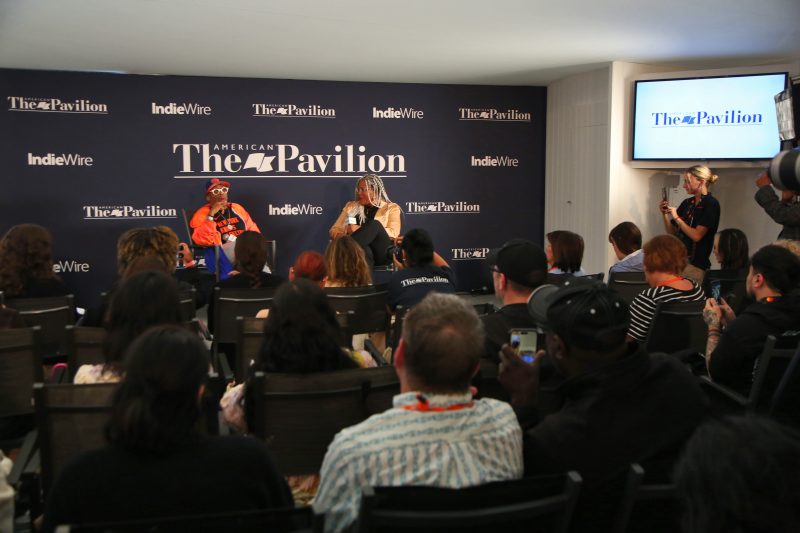
Il secondo, meno visibile ma sempre più rivelatore, si svolge a pochi metri di distanza, sulla spiaggia dietro il Palais, dentro l’ecosistema del villaggio internazionale e in particolare dell’American Pavilion. È qui che il cinema contemporaneo — soprattutto quello americano — smette di presentarsi come mito e comincia a riflettersi come industria, infrastruttura e sistema culturale in trasformazione.
Un osservatorio sull’industria e un luogo di networking
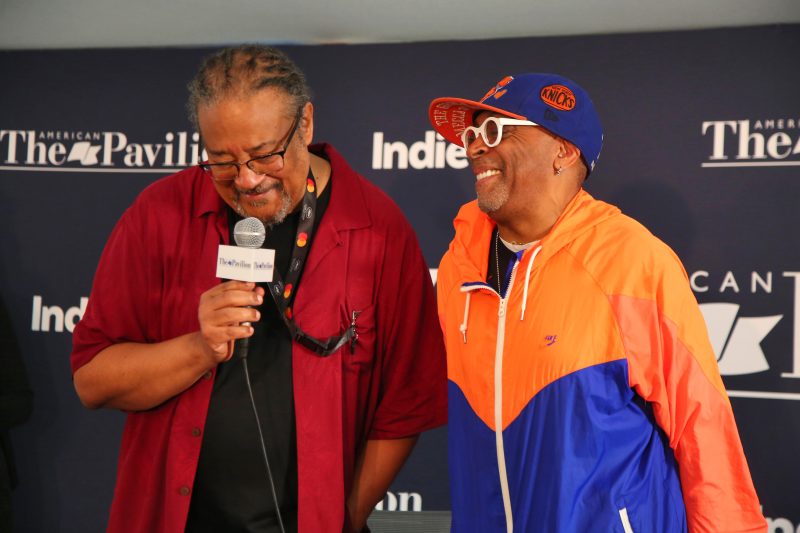
L’American Pavilion, nella sua configurazione attuale, rimane uno spazio ibrido in cui convivono hospitality, networking, formazione e programmazione industry. Negli ultimi anni, però, la sua funzione si è progressivamente spostata verso una più evidente centralità discorsiva, resa ancora più esplicita dalla partnership con IndieWire, che nel 2026 ne diventa asse editoriale.
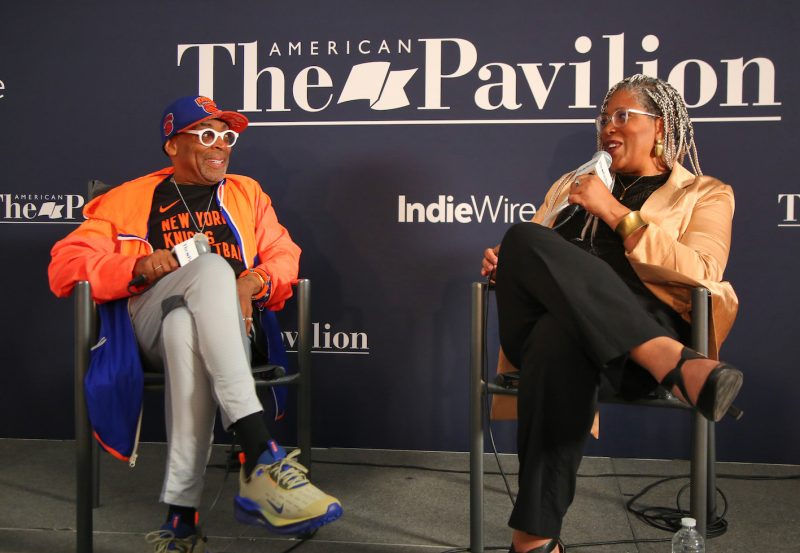
Le sessioni ospitate al Roger Ebert Salon non si limitano più a mettere in contatto professionisti del settore: si organizzano attorno a cornici tematiche strutturate — Future of Filmmaking, Filmmaker’s Toolkit, What No One Tells You, In Conversation — che indicano una crescente sistematizzazione del dibattito industriale.
Allo stesso tempo, il contenuto esce dai confini fisici di Cannes e viene rilanciato attraverso IndieWire.com, i canali social e le newsletter, ampliandone la circolazione ben oltre il perimetro del festival.
Nel loro insieme, questi elementi segnalano uno spostamento chiaro: il discorso sull’industria cinematografica non è più soltanto interno al festival system, ma si intreccia in modo sempre più stretto con le sue infrastrutture editoriali e di distribuzione mediatica.
2025–2026: continuità e accelerazione
Già nel 2025 il Pavilion si configurava come uno spazio in cui le questioni strutturali dell’industria erano centrali: distribuzione, finanziamento, internazionalizzazione delle produzioni, documentario, inclusione e sopravvivenza del cinema indipendente americano.
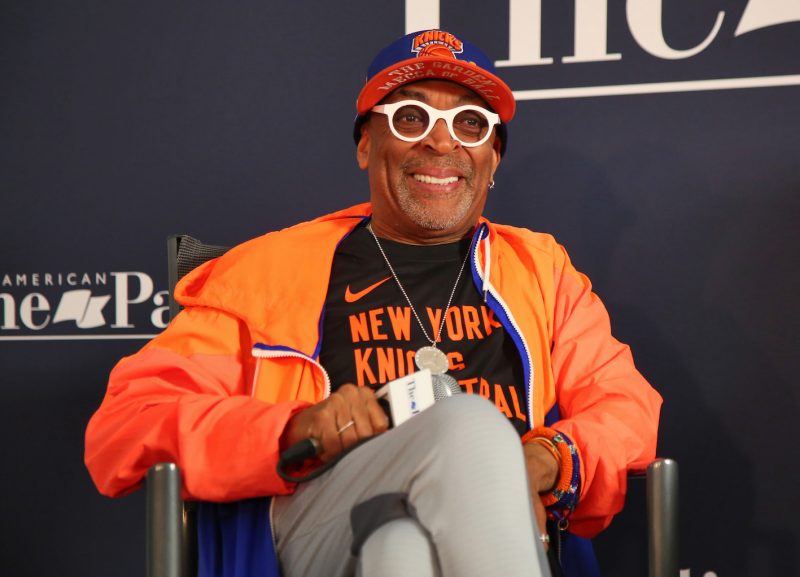
Accanto a figure come Spike Lee, Richard Linklater e Vicky Krieps, emergevano già alcuni nuclei ricorrenti: la trasformazione dei modelli distributivi, l’espansione delle co-produzioni internazionali e l’evoluzione del rapporto tra cinema e piattaforme.
Nel 2026 questi temi non scompaiono, ma si consolidano e si espandono in modo più esplicito.
Il lessico della trasformazione
Il programma 2026 mostra una forte concentrazione su alcune direttrici ricorrenti: nuovi modelli di finanziamento, IP economy, audience building, strategie post-streaming, co-produzioni internazionali e uso crescente dell’intelligenza artificiale nei processi creativi.
Il panel “Music, Film & the New Storytelling Stack”, presentato in collaborazione con Andreessen Horowitz, è emblematico di questo cambio di linguaggio: il film non viene più discusso come oggetto autonomo, ma come parte di un’infrastruttura più ampia che include strumenti tecnologici, piattaforme, dati, musica e sistemi di distribuzione.
La presenza di attori del venture capital tecnologico all’interno del programma conferma l’intensificazione del dialogo tra industria audiovisiva e capitale tecnologico, già in corso negli ultimi anni ma ora più esplicitamente tematizzato.
Intelligenza artificiale e nuova grammatica produttiva
Nel 2026 l’intelligenza artificiale occupa uno spazio più strutturato rispetto al passato recente, con il lancio della serie “IndieWire Show Me: An AI Filmmaking Series”, che ospita conversazioni con filmmaker e partner del settore tecnologico come Paul Trillo e Asteria.
Il focus non è tanto sulla contrapposizione tra umano e macchina, quanto sull’integrazione dell’AI nei processi creativi: tempi di produzione, espansione delle possibilità visive e ridefinizione dei flussi di lavoro.
Il dibattito si sposta così progressivamente da una fase di interrogazione generale a una fase più operativa, in cui l’AI viene considerata una componente già interna alla filiera produttiva.
Decentramento e nuove geografie del cinema
Un altro elemento ricorrente del programma è la progressiva decentralizzazione delle geografie produttive.
Le conversazioni con registi e produttori internazionali — da Diego Luna, impegnato in un dialogo sulle co-produzioni tra Messico e Spagna per Ashes, fino ai fratelli Arie e Chuko Esiri, che con Clarissa rileggono Mrs. Dalloway di Virginia Woolf in un contesto contemporaneo — riflettono una progressiva internazionalizzazione delle traiettorie produttive e narrative.
In questa prospettiva, Hollywood appare meno come centro unico e più come nodo all’interno di un sistema globale di produzioni, finanziamenti e immaginari.
Anche iniziative come Gold House e i programmi legati al “local to global storytelling” rafforzano questa direzione.
La questione economica come asse centrale
Sotto la moltiplicazione dei linguaggi e dei temi, resta una costante: la sostenibilità economica del cinema indipendente.
Il programma insiste su tax credit, incentivi fiscali, modelli di finanziamento alternativi, strategie di audience e nuove forme di distribuzione. Non si tratta solo di innovazione, ma di una ricerca di equilibrio in un sistema produttivo meno stabile rispetto al passato.
Anche il “California Day”, con il suo focus sugli incentivi della Film Commission e sul ritorno delle produzioni nello Stato, evidenzia questa tensione: la competizione tra territori per attrarre produzione audiovisiva resta un tema strutturale dell’industria.
Un laboratorio più che un palco
L’American Pavilion non è più soltanto “l’America a Cannes”, né esclusivamente uno spazio di networking informale. È sempre più un luogo in cui l’industria audiovisiva riflette pubblicamente su sé stessa mentre attraversa una fase di trasformazione tecnologica, economica e geografica.
Per anni è stato soprattutto uno spazio di connessione e socialità professionale. Oggi appare sempre più come un ambiente in cui il cinema viene discusso, analizzato e riorganizzato come sistema complesso, tra tecnologia, capitale e nuove forme di produzione culturale.
VERSIONE INGLESE
The Other Cannes: Inside the American Pavilion, Where American Cinema Reinvents Itself
Between Industry and Transformation: An Observatory of Contemporary Cinema
Every year, Cannes produces at least two parallel festivals.
The first is the one captured in photographs: the red carpet, garments designed for visibility, carefully calibrated standing ovations, and a cinephile liturgy that turns the Palais into a temporary cathedral of global cinema.
The second, less visible yet increasingly revealing, unfolds just a few steps away, on the beach behind the Palais, within the ecosystem of the international village and, in particular, the American Pavilion. Here, contemporary cinema — especially American cinema — no longer presents itself as myth, but reflects itself as industry, infrastructure, and a cultural system in transformation.
An Observatory of the Industry and a Networking Space
The American Pavilion, in its current configuration, remains a hybrid space where hospitality, networking, training, and industry programming coexist. In recent years, however, its role has gradually shifted toward a more explicit discursive centrality, further reinforced by its partnership with IndieWire, which in 2026 becomes the program’s editorial backbone.
Sessions hosted at the Roger Ebert Salon no longer simply connect industry professionals; they are structured around clearly defined thematic frameworks — Future of Filmmaking, Filmmaker’s Toolkit, What No One Tells You, In Conversation — signalling a growing systematisation of industrial discourse.
At the same time, content is no longer confined to the physical boundaries of Cannes. It is amplified through IndieWire.com, social media channels, and newsletters, extending its reach far beyond the festival perimeter.
Together, these elements mark a clear shift: discourse on the film industry is no longer contained within the festival system, but increasingly intertwined with its editorial and media infrastructures.
2025–2026: Continuity and Acceleration
As early as 2025, the Pavilion already functioned as a space where structural questions of the industry were central: distribution, financing, the internationalisation of production, documentary filmmaking, inclusion, and the survival of American independent cinema.
Alongside figures such as Spike Lee, Richard Linklater, and Vicky Krieps, recurring concerns had already emerged: the transformation of distribution models, the expansion of international co-productions, and the evolving relationship between cinema and streaming platforms.
In 2026, these trajectories do not disappear — they intensify and become more explicit.
The Vocabulary of Transformation
The 2026 program reveals a strong concentration around recurring axes: new financing models, the IP economy, audience building, post-streaming strategies, international co-productions, and the increasing integration of artificial intelligence into creative processes.
The panel Music, Film & the New Storytelling Stack, presented in collaboration with Andreessen Horowitz, is emblematic of this shift in language: film is no longer discussed as an autonomous object, but as part of a broader infrastructure encompassing technological tools, platforms, data, music, and distribution systems.
The presence of venture capital actors within the program underscores the deepening dialogue between the audiovisual industry and technological capital — a process already underway in recent years, but now brought into sharper focus.
Artificial Intelligence and a New Production Grammar
In 2026, artificial intelligence occupies a more structured position than in the recent past, with the launch of IndieWire Show Me: An AI Filmmaking Series, featuring conversations with filmmakers and technology partners such as Paul Trillo and Asteria.
The focus is no longer on the opposition between human and machine, but on the integration of AI into creative workflows: production timelines, expanded visual possibilities, and the reconfiguration of production processes.
The debate thus moves from a general phase of interrogation to a more operational one, in which AI is increasingly understood as an embedded component of the production chain.
Decentralisation and New Cinematic Geographies
Another recurring element is the ongoing decentralisation of production geographies.
Conversations with international filmmakers and producers — from Diego Luna, discussing Mexico–Spain co-productions for Ashes, to Arie and Chuko Esiri, who with Clarissa reimagine Virginia Woolf’s Mrs Dalloway in a contemporary Nigerian context — reflect the growing internationalisation of production and narrative trajectories.
From this perspective, Hollywood appears less as a singular centre and more as a node within a global system of production, financing, and imaginaries.
Initiatives such as Gold House and programs centred on “local to global storytelling” further reinforce this trajectory.
The Economic Question as a Central Axis
Behind the multiplication of languages and themes lies a constant concern: the economic sustainability of independent cinema.
The program places strong emphasis on tax credits, fiscal incentives, alternative financing models, audience strategies, and new distribution frameworks. This is not merely innovation, but an attempt to restore balance within a production system that has become structurally less stable.
Even “California Day,” with its focus on Film Commission incentives and efforts to bring production back to the state, underscores this tension: competition between territories to attract audiovisual production remains a structural force within the industry.
A Laboratory Rather Than a Stage
The American Pavilion is no longer simply “America in Cannes,” nor merely an informal networking hub. It is increasingly a space where the audiovisual industry reflects publicly on itself while undergoing a phase of technological, economic, and geographic transformation.
For years, it functioned primarily as a site of connection and professional sociability. Today, it increasingly resembles a laboratory where cinema is discussed, analysed, and reorganised as a complex system — at the intersection of technology, capital, and new forms of cultural production.