






Alla Mostra di Venezia DAU ha conquistato il Leone d’Argento. Intervista esclusiva a Ilya Khrzhanovsky ENGLISH VERSION BELOW
DAU è arrivato a Venezia come traguardo di una traiettoria e, nello stesso tempo, come ritorno alla sua origine: la mother film, il film-madre attorno al quale tutto il resto ha preso forma. Quello che resta sullo schermo è un’opera di 195 minuti che non ha alcuna intenzione di ridurre a racconto lineare l’enormità del materiale da cui proviene. Il Leone d’Argento per la regia a Ilya Khrzhanovsky arriva dopo un percorso tutt’altro che lineare: tra gli addetti ai lavori, nei giorni del palmarès, sono circolate indiscrezioni su una discussione particolarmente articolata all’interno della giuria, protrattasi fino alle battute finali. Una scelta che, al di là delle indiscrezioni e delle polemiche che avevano accompagnato il film fino al Lido, appare coerente con la radicalità di un’opera che difficilmente può essere ricondotta a categorie convenzionali. Per capire che cosa sia davvero DAU, bisogna tornare al principio.
Alla fine degli anni Duemila, a Kharkiv, Ilya Khrzhanovsky fece costruire un intero istituto di ricerca sovietico e decise non semplicemente di ricostruire un’epoca per farla rivivere. Scienziati, artisti, filosofi, funzionari, attori e persone comuni furono introdotti in quel mondo e sottoposti alle sue coordinate: regole, gerarchie, desideri, paure. La macchina da presa registrava ciò che accadeva quando l’individuo veniva sottratto al proprio ambiente e consegnato alle leggi di un sistema chiuso. Come Niki Jumpei, il protagonista de La donna di sabbia (Suna no onna, 1964) di Hiroshi Teshigahara, che, separato dal mondo che conosce, finisce per misurarsi con uno spazio dalle regole proprie, capace di sovvertire la percezione di sé e della realtà.
All’origine c’era l’idea di un biopic su Lev Landau, fisico sovietico geniale, premio Nobel per la Fisica, uomo inquieto, seduttore, marito infedele e figura ambigua nel rapporto fra libertà individuale, potere e responsabilità della scienza. Tra il 2008 e il 2011, il progetto si trasformò però in un esperimento antropologico, cinematografico e performativo di proporzioni inusitate: circa 400 interpreti principali e 10.000 comparse furono coinvolti in un ambiente nel quale vivevano e lavoravano secondo gerarchie e regole proprie, lasciando che relazioni, desideri e conflitti si sviluppassero davanti alla macchina da presa. Il girato complessivo avrebbe raggiunto quasi 700 ore.
Da questo materiale sarebbero nati film, installazioni e performance. Il progetto si sarebbe spostato da Kharkiv a Parigi, dalle esperienze immersive del Centre Pompidou e del Théâtre du Châtelet fino a DAU. Natasha e DAU. Degeneration, presentati alla Berlinale nel 2020.La proliferazione di forme ha dilatato talmente il progetto originario da renderlo quasi irriconoscibile. È a questa matrice che Venezia torna con DAU. Al centro c’è ancora Landau, interpretato da Teodor Currentzis. È un fisico brillante e inquieto che tenta di difendere la propria libertà intellettuale e personale dentro un sistema costruito per limitarla.
La sua vicenda attraversa la scienza, il desiderio, il matrimonio, il sesso, l’amicizia, la paura, il KGB e il rapporto fra conoscenza e potere. Landau vuole essere libero, ma ogni libertà sembra produrre una nuova dipendenza; persino la ricerca scientifica, forma estrema dell’autonomia del pensiero, finisce per essere risucchiata dalla macchina dello Stato. Greenaway si era cimentato in un’operazione simile con I misteri del giardino di Compton House (The Draughtsman’s Contract, 1982). L’inquadratura, mappata con ossessiva precisione palmo a palmo dal disegnatore, finiva per rivelarsi irrilevante rispetto a tutto ciò che restava fuori dal quadro, trasformando la sua stessa conoscenza in una prigione.
Quarant’anni dopo, DAU sembra riprendere quella stessa inquietudine e trascinarla fuori dalla cornice: un intero mondo consegnato a uno sguardo dal quale nessuno, nemmeno chi lo ha costruito, può dirsi davvero al riparo.
Khrzhanovsky sottrae Landau alla forma convenzionale del biopic e lo trasforma in una figura tragica da tragedia greca. È nella tragedia classica, nella collisione fra destino e libertà individuale, che il regista individua una chiave per leggere il personaggio. La fisica contemporanea, intrecciata alla sua vicenda biografica, diventa la struttura concettuale attraverso cui il regista interroga il destino umano.
Così DAU si allontana definitivamente dal film storico. Il passato sovietico non è il suo oggetto — Khrzhanovsky lo dice nell’intervista: DAU non è un film politico — ma il dispositivo attraverso cui mettere alla prova l’individuo.
Il confine fra rappresentazione e realtà diventa così la vera materia del film. Personaggio e interprete, set e mondo, esperienza e messa in scena finiscono per occupare la stessa zona ambigua. DAU è la sedimentazione cinematografica di un esperimento durato vent’anni.
Il risultato è un gioco di specchi in cui la matrice dell’immagine finisce per coincidere con ciò che l’ha generata.
L’impossibilità della libertà
Uno dei nuclei più radicali di DAU è l’idea della felicità che il fisico espone all’inizio del film davanti a una classe di studenti, in una sequenza che rievoca l’estetica dei documentari di propaganda dell’UFA. La felicità non è una condizione da raggiungere, ma un movimento incessante verso qualcosa di irraggiungibile. Amore, lavoro, amicizia, desiderio e libertà diventano così elementi di una formula sempre provvisoria, destinata a incrinarsi dall’interno.
Landau cerca la libertà nel sesso e mette in crisi il rapporto con la moglie Nora. La cerca nella scienza e si ritrova dentro la macchina militare dello Stato. La cerca infine nella possibilità di sottrarsi al conformismo morale, finendo però per essere catturato dai propri desideri. La libertà, in DAU, non coincide mai con l’emancipazione: ogni tentativo di conquistarla genera una nuova forma di dipendenza.
Nora è forse la figura più dolorosa di questo movimento. Mentre Landau continua a cercare fuori dal matrimonio una forma assoluta di libertà, lei rimane legata a quell’uomo, a quella relazione, a quel mondo. La loro storia assume così la forma di una tragedia privata e domestica, inscritta dentro una tragedia politica più vasta.
E il KGB è sempre lì, presenza concreta prima ancora che ideologica: sorveglia, ricatta, interroga, punisce. Persino l’intimità può diventare materia di controllo; persino il desiderio, nel momento in cui pretende di essere libero, ricade dentro una struttura di potere.
Il cortocircuito ontologico più profondo di DAU consiste nel fatto che la libertà non è l’opposto del potere, ma un’entità proteiforme che, nel tentativo di creare i propri anticorpi, si consuma invece nel suo interno claustrofobico.
Il cinema come esperimento
La vertigine di DAU comincia nel modo in cui si arriva alle immagini. Khrzhanovsky non ha costruito un set per fingere un mondo sovietico, ma ha costruito le condizioni perché quel mondo potesse funzionare. L’istituto era scenografia e insieme laboratorio sociale, una macchina chiusa nella quale gli interpreti non sapevano cosa poteva accadere. La radicalità del progetto coincide quindi con la sua zona più oscura.
Negli anni, attorno a DAU si sono accumulate accuse di metodi coercitivi e maltrattamenti, dalle pressioni durante i casting alle testimonianze su episodi di violenza fisica e psicologica sul set. Il Guardian ha raccolto alcune di queste testimonianze; dopo la Berlinale 2020, cinque critici russi hanno contestato pubblicamente le condizioni etiche in cui sarebbero state realizzate alcune scene di DAU. Natasha. Khrzhanovsky ha respinto le accuse, sostenendo che i partecipanti conoscessero le regole dell’esperimento e potessero sottrarsi alle situazioni.
Non è un dettaglio laterale, ma una delle contraddizioni strutturali di DAU. Il dispositivo di Khrzhanovsky vive sulla soglia in cui la realtà che registra è anche quella che il dispositivo stesso contribuisce a produrre, spostando continuamente il limite tra esperienza e manipolazione.
Una genealogia visiva
DAU contiene una vertiginosa genealogia visiva. Khrzhanovsky scava dentro un secolo di immaginario russo e ne mette in collisione pittura, teatro, scenografia, avanguardia, realismo socialista e cultura popolare. I riferimenti non compongono un catalogo di citazioni, ma una grammatica mobile che cambia a seconda dello spazio e della funzione dell’immagine.
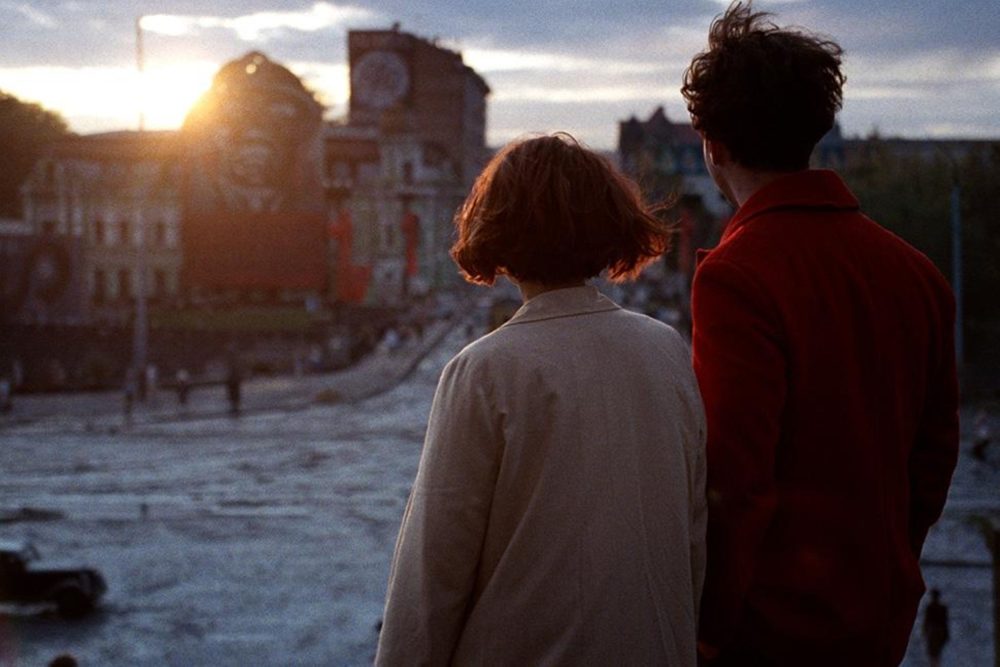
Negli esterni, il film sembra concedersi una libertà quasi carnascialesca. Si possono riconoscere echi di Konstantin Somov e Sergej Sudejkin, con il loro universo di maschere, travestimenti, desiderio e teatralità, nel quale i corpi sembrano continuamente entrare e uscire da un ruolo. Da qui il percorso conduce alla grande stagione scenografica dei Ballets Russes e a Léon Bakst, per il quale colore, costume e spazio sono materia drammaturgica. In questo caso il riferimento ha anche una traccia concreta nella storia del progetto. A Parigi, Les Salons DAU au Châtelet accostava infatti opere di Bakst, Mikhail Larionov e Natalia Goncharova ai frammenti delle installazioni di DAU.
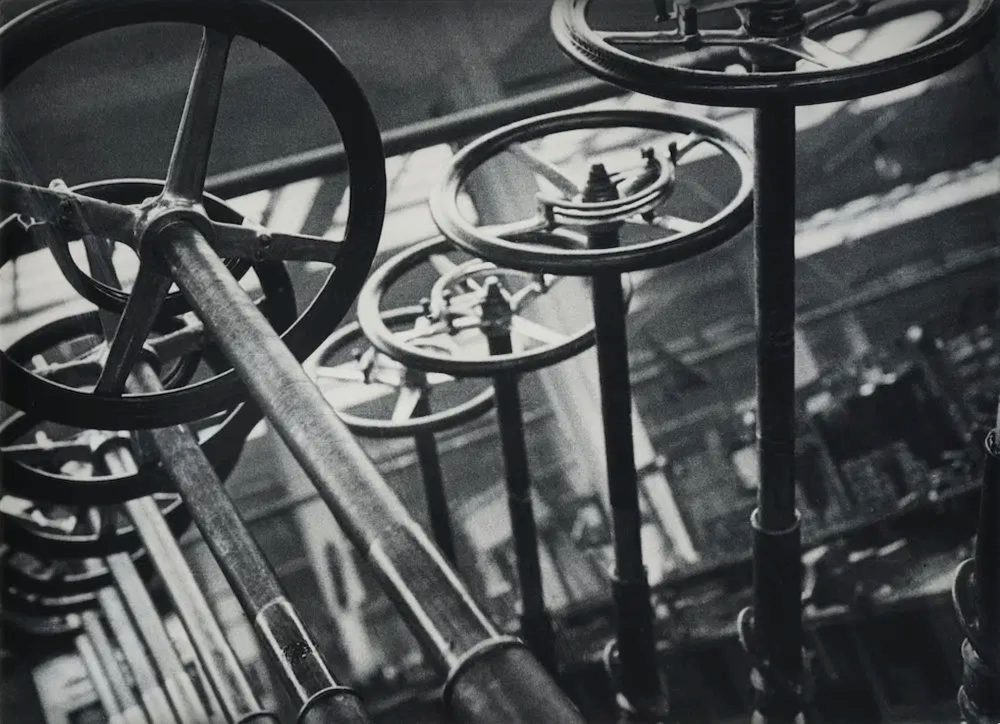
Ma la genealogia visiva di DAU non si esaurisce nella teatralità. Dentro la sua materia affiorano anche le geometrie e l’immaginario del Costruttivismo, da Vladimir Tatlin ad Aleksandr Rodchenko. In Tatlin, lo spazio diventa struttura, costruzione, materia organizzata; in Rodchenko, la composizione si libera della centralità della figura e si trasforma in angolo, diagonale, dinamica. È un passaggio decisivo verso un’immagine in cui il corpo, l’architettura e l’oggetto appartengono allo stesso sistema di forze. C’è poi Marc Chagall, con quella capacità di sospendere corpi, oggetti e architetture in uno spazio nel quale la logica ordinaria sembra perdere peso. Ma è soprattutto l’avanguardia russa a offrire una chiave particolarmente fertile per leggere la dinamica visiva del film.
In Mikhail Larionov e nel Rayonismo l’oggetto tende a dissolversi. A contare non è più la cosa in sé, ma l’energia che la attraversa, la luce, le linee di forza, la vibrazione dello spazio. È una concezione che può trovare una sorprendente risonanza nella macchina da presa di DAU, spesso mobile e più interessata alle relazioni fra corpi, superfici e colori che alla stabilità dell’immagine.
Con Natalia Goncharova emerge una tensione cubo-futurista legata al movimento, alla velocità e alla modernità industriale. In Lyubov Popova, le Pictorial Architectonics trasformano invece la superficie in uno spazio instabile, costruito attraverso geometrie, piani sovrapposti e masse cromatiche. In Alexandra Exter, infine, la composizione si frammenta ulteriormente in prospettive spezzate e geometrie mobili, mentre il costume può trasformare il corpo in una vera e propria architettura. Sono tutte risonanze più che influenze dichiarate, ma aiutano a mettere a fuoco la natura espansa dell’immagine di DAU.
Questi riferimenti funzionano infatti meno come una serie di influenze dirette che come un sistema di echi capace di ricomporre i diversi strati diegetici, extradiegetici e visivi del progetto. È una concezione nella quale cinema, teatro, pittura, scenografia e performance entrano in rapporto osmotico e i loro confini diventano continuamente permeabili. La stessa natura del progetto DAU, nato all’intersezione fra cinema, arte e antropologia e sviluppatosi anche attraverso installazioni immersive, autorizza questa lettura.
Ed è proprio questa genealogia a rendere leggibile una delle dicotomie più evidenti del film. Fuori, l’eccentricità dell’avanguardia e del carnevale. Dentro, l’ordine del realismo socialista.
Gli esterni respirano, si deformano, si moltiplicano. Gli interni disciplinano. Fuori il mondo può diventare grottesco, instabile, quasi allucinatorio. Dentro, tutto torna alla geometria del sistema, fra corridoi, laboratori, uffici, istituzioni e corpi disposti nello spazio. Khrzhanovsky finisce così per far convivere nella stessa immagine due Russie. Una è quella dell’immaginazione, del corpo, della maschera e della metamorfosi. L’altra è quella del potere che misura, ordina e dispone. Il carnevale deflagra all’esterno con una forza uguale e contraria a quella con cui il sistema tenta continuamente di comprimere la sua energia all’interno. Esattamente come nel primo principio della termodinamica.
Un proemio che è come un big bang
La macchina da presa avanza e il quadro sembra venirle incontro. Rosso, viola, giallo, verde si accendono, si sovrappongono, si urtano, come se il colore non fosse ancora materia stabilizzata, ma energia in movimento. L’immagine pulsa, brulica di vita, di possibilità, di desiderio. È un humus visivo, qualcosa che sta ancora prendendo forma sotto la superficie.
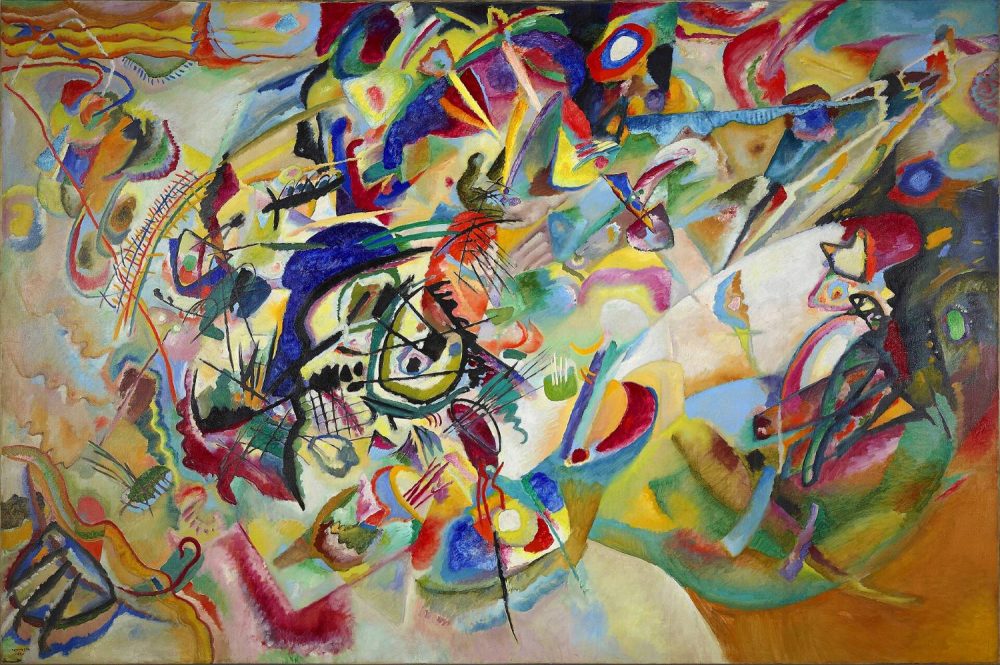
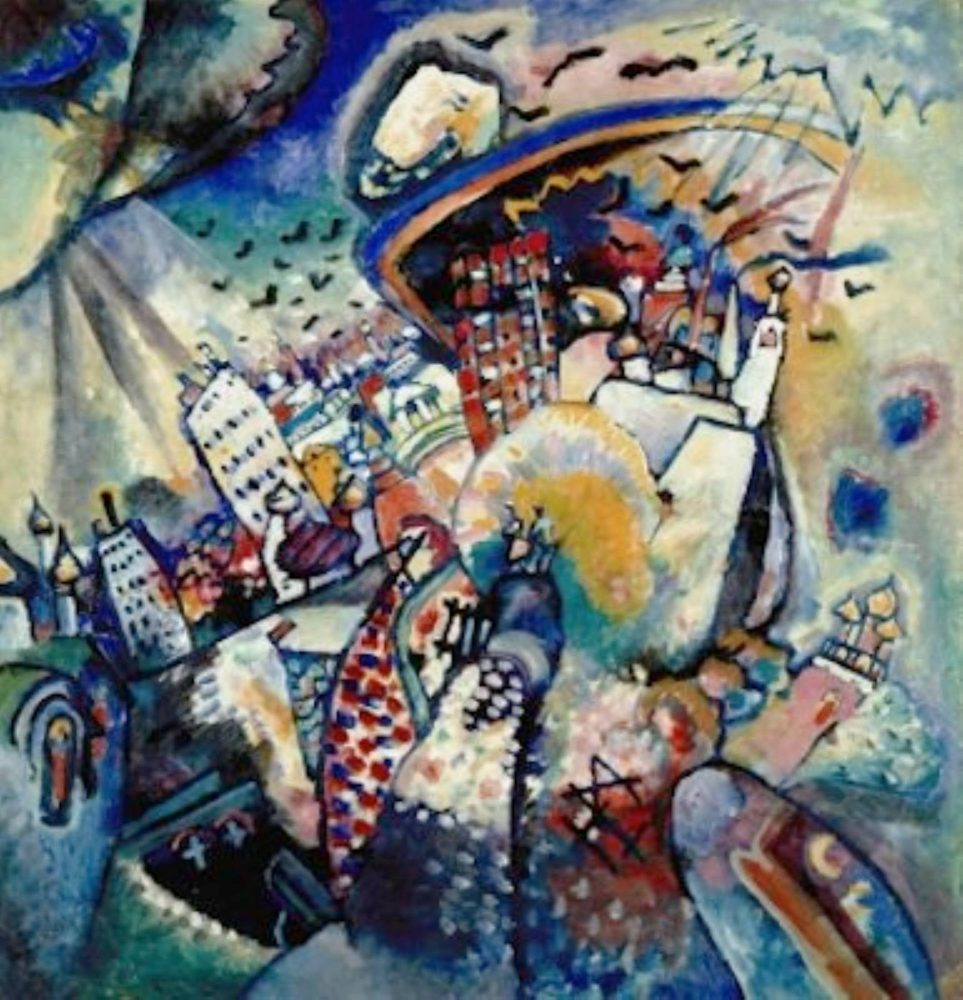
Sembra una versione cinematografica di un quadro di Kandinskij, dove le forme astratte acquistano materia sensibile, con la stessa qualità sinestetica. La pittura prende distanza dalla superficie e diventa spazio, ritmo, traiettoria. Il colore trascina gli oggetti, le forme generano universi autonomi.
Khrzhanovsky ha parlato esplicitamente dell’influenza di Kandinskij sul set, sui costumi e sulla tavolozza cromatica del progetto. Ma quella matrice, nel film, si apre in una costellazione più vasta dell’avanguardia russa. C’è Malevič, nella tensione verso una forma liberata dalla rappresentazione; Popova, nella costruzione dello spazio attraverso piani, diagonali e collisioni; Filonov, nella proliferazione quasi organica della superficie. E c’è Eisenstein, con un’idea del cinema fondata sulla collisione delle forme e sulla capacità del montaggio di produrre una percezione prima ancora che un significato.
È come se DAU facesse saltare la distinzione fra quadro e inquadratura. La pittura entra nel cinema come principio vitale. Il colore diventa movimento, la superficie si apre in profondità, il corpo si fa forma e la forma torna a farsi corpo. Ogni immagine sembra sul punto di disgregarsi e ricomporsi secondo leggi proprie, come se l’inquadratura fosse soltanto una momentanea condensazione di un’energia che continua a propagarsi oltre i suoi bordi.
In DAU, l’avanguardia non è dunque un repertorio di forme del passato. È una forza ancora viva, capace di deformare la realtà, di farla esplodere dall’interno e di restituirla allo sguardo come materia ancora incandescente.
Dal colore al buio
All’inizio Landau si distingue nettamente dal caos del mondo che lo circonda, una macchia purpurea, sensuale e quasi tattile. Il rosso della sua giacca lo staglia dal fondo, un corpo di colore ancora integro dentro una realtà in ebollizione.
Poi, progressivamente, il colore si consuma. La vitalità cromatica iniziale si spegne in tonalità sempre più grigie, fino a precipitare, per forza centrifuga, in un buco nero. La parabola visiva accompagna quella morale. Una spirale lo conduce lentamente verso il vuoto, mentre ciò che all’inizio sembrava energia vitale si trasforma in dissipazione.
A fare da contrappunto la figura di Apollo, incarnazione della ragione, della misura, dell’ordine, contrapposta a Dioniso, con il desiderio, il sesso, l’ebbrezza, l’eccesso, la perdita del controllo. Landau attraversa continuamente questa frattura, sospeso tra la volontà di conoscere e l’impulso a dissolversi.
Vuole comprendere l’universo, ma non riesce a comprendere se stesso. Vuole dominare la materia e finisce dominato dal sistema. La sua tragedia si consuma nell’impossibilità di conciliare l’ordine che cerca nel cosmo con il caos che lo abita.
La conoscenza come colpa
Uno dei temi più potenti dell’indagine di DAU è quello della conoscenza. Gli scienziati discutono della caduta dell’uomo dal Paradiso. Ma Landau li corregge. Il peccato originale non è il sesso e neppure il desiderio di conoscenza, ma la hybris, il desiderio di superarsi, l’impulso incontrollabile dell’uomo a superare se stesso e ogni limite.
La conoscenza diventa così una colpa originaria e, insieme, una condanna. E il suo paradosso ontologico è che nel suo impulso di sopravvivenza è inscritta la propria rovina.
Landau vive dentro questa contraddizione. Vuole arrivare là dove nessuno è ancora arrivato, spingersi oltre il confine del conosciuto. Ma più la conoscenza si espande, più si restringe lo spazio in cui l’uomo può dirsi innocente.
Espansione, trasformazione e caduta
La logica tragica del film sembra scandita da tre movimenti. All’inizio bruciano le icone religiose. Più avanti brucia Lenin. Alla fine bruciano Landau, la famiglia, un intero sistema simbolico.
Il fuoco ritorna, ma ogni volta trova un mondo diverso da consumare. Prima la fede, poi l’ideologia, infine l’uomo. È come se la storia procedesse per combustioni successive, cancellando le proprie immagini senza riuscire mai a liberarsi dalla forma che le produce.
La memoria si brucia insieme alle sue figure. Il passato viene eroso, il presente ricomincia dalle ceneri e ciò che sembra una rottura si rivela ancora una volta un ritorno.
Dau allora assume una dimensione profondamente sisifea. L’uomo tenta incessantemente di superare il proprio limite, di sottrarsi a ciò che lo precede, di ricominciare. Ma ogni slancio verso l’evoluzione ricade nella stessa coazione a ripetere.
Cambia il mondo, cambiano le sue immagini, cambiano i nomi del potere, ma il sistema resta lo stesso.
Uno steampunk sovietico
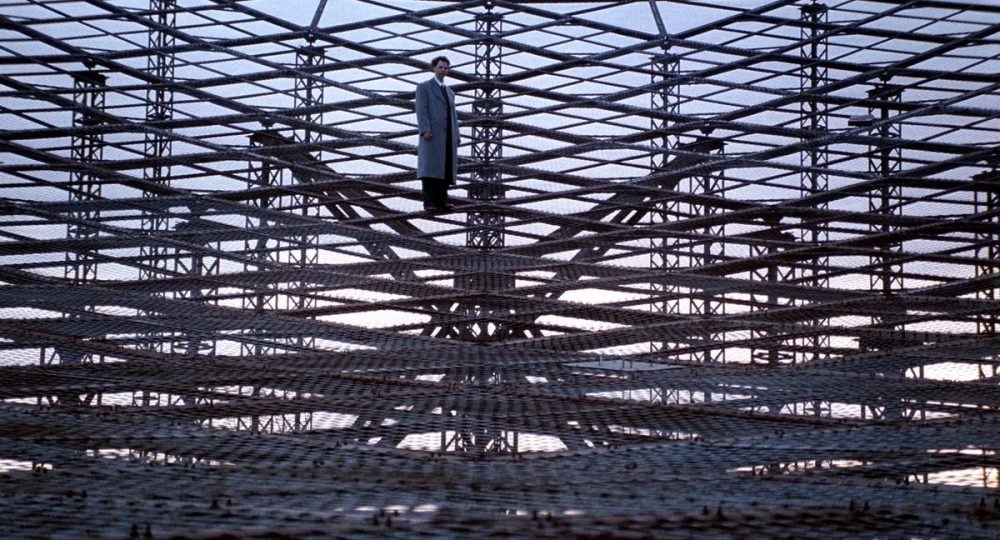
Ci sono momenti in cui DAU prende una deriva steampunk, attraversata da suggestioni di retrofuturismo e dieselpunk: reti metalliche, corridoi, macchinari, laboratori, fabbriche, corpi al lavoro, oggetti sospesi fra un futuro che non è mai arrivato e un passato che forse non è mai esistito. Sicuramente nelle reference del regista c’è Fritz Lang.
Anche il suono poi sembra avere una propria materia. Rumori industriali, porte, passi, voci, superfici che vengono lucidate, oggetti spostati, macchine che continuano a vivere quando l’immagine si arresta. Un secondo sistema nervoso attraversa il film.
È un cinema che non cerca la pulizia, ma la saturazione.
Ilya
Ilya Khrzhanovsky è come il suo cinema. Debordante, magnetico, ostinato. Un sognatore capace di inseguire un’idea per vent’anni, anche quando ha smesso da tempo di obbedire a qualunque logica produttiva.
Nato a Mosca nel 1975, figlio dell’animatore Andrei Khrzhanovsky, con una madre nata in Ucraina e di origine ebraica, vive oggi in Germania. Ha cittadinanza tedesca, britannica e israeliana e ha rinunciato a quella russa nel 2024.
La sua presenza a Venezia ha provocato la protesta del governo ucraino, anche per la partecipazione di Teodor Currentzis, che non ha pubblicamente condannato l’invasione russa dell’Ucraina e mantiene rapporti professionali con la Russia. Assente al Lido per un’emergenza dell’ultimo minuto, Currentzis è stato difeso da Khrzhanovsky con una frase netta: ciascuno è responsabile delle proprie scelte.
Il film sembra raccogliere quella stessa tensione. Landau è un uomo davanti alla scelta. E ogni scelta ha un prezzo.
Il paradosso politico
Khrzhanovsky insiste sul fatto che DAU non sia un film politico. È interessante la posizione di un artista che vuole sottrarsi al consumo immediato del presente.
Se fosse soltanto un film sull’URSS, sarebbe già storia e se fosse un film sulla Russia contemporanea, sarebbe destinato a invecchiare.
L’ambizione – e la hybris – di Khrzhanovsky stanno nell’ affidare all’opera la possibilità di sopravvivere al tempo e allo spazio.
Think Different
Una volta, nei festival, potevano ancora accadere cose imprevedibili. Nascevano mondi, comparivano universi. Nel buio della sala di proiezione si materializzava quasi la teoria delle stringhe, l’idea vertiginosa che sotto la materia visibile esistesse una trama più profonda, fatta di connessioni, vibrazioni, possibilità.
È commovente che DAU, nel 2026, sia miracolosamente scampato alla levigatura, alla correttezza obbligatoria, alla standardizzazione dello sguardo. Non cerca di rendersi immediatamente leggibile, riconoscibile, né di ricondurre ogni esperienza a un codice condiviso.
Dentro DAU sopravvive qualcosa che l’industria culturale internazionale sembra avere progressivamente smarrito. Una certa idea mitteleuropea della cultura come luogo di collisione, dove lingue, temperamenti, discipline e mondi diversi potevano incontrarsi senza dover necessariamente convergere. La diversità non come categoria da amministrare, ma come attrito, come energia capace di generare l’inaspettato.
Quella di Khrzhanovsky è un’opera imperfetta, smisurata, contraddittoria, a tratti estenuante. Ma proprio nella sua sproporzione c’è qualcosa di eroico. È quasi temerario che Alberto Barbera e Pietrangelo Buttafuoco abbiano scelto di portarla in concorso, restituendo al festival il rischio dell’eccesso, dell’errore, perfino del fallimento.
DAU è una vertigine perché resiste a quasi tutto ciò che il sistema audiovisivo contemporaneo tende a ottimizzare. La durata, la forma, la comprensibilità, perfino il modo in cui un’opera dovrebbe essere guardata. Non si lascia consumare.
È una vertigine, un colpo di fulmine. Non soltanto celebra il cinema, ma ne è quasi un’estensione esoterica. Un’opera estrema, appassionata, proteiforme che può ancora irrompere dentro un sistema sempre più ordinato e ricordarci che l’arte non nasce necessariamente dal consenso, dalla misura o dalla riconoscibilità.
Nasce anche dall’eccesso, dall’errore, dalla differenza.
Sull’altare contemporaneo di diversità, equità e inclusione abbiamo sacrificato l’unicità irriducibile dell’essere umano.
La scommessa di DAU è folle. Non raccontare un mondo già dato, ma tentare di costruirne uno abbastanza grande da contenere tutte le sue contraddizioni. Perché il cinema, quando osa davvero, non dovrebbe soltanto rappresentare il mondo. Dovrebbe ancora avere il coraggio di inventarne uno che prima non esisteva.
***
DAU, Inside the Game of Mirrors. Anatomy of an Experiment. Exclusive Interview with the Silver Lion Winner
At the Venice Film Festival, DAU took home the Silver Lion, following the controversy that preceded its presentation. Over two decades, Ilya Khrzhanovsky has transformed the biography of a Soviet physicist into one of the most radical experiments in contemporary cinema.
DAU arrived in Venice as the culmination of a trajectory and, at the same time, a return to its point of origin: the mother film, the film-mother around which everything else took shape. What remains on screen is a 195-minute work that refuses to reduce the enormity of the material from which it emerged to a linear narrative. The Silver Lion for Best Director awarded to Ilya Khrzhanovsky came after a far from straightforward journey. In the days surrounding the awards, industry insiders spoke of particularly intense discussions within the jury that continued until the final stages. Whatever the speculation, the award is consistent with the radical nature of a work that resists conventional categories.
To understand what DAU truly is, one has to return to the beginning. At the end of the 2000s, in Kharkiv, Ilya Khrzhanovsky had an entire Soviet research institute built and set out to reconstruct an era and bring it back to life. Scientists, artists, philosophers, officials, actors, and ordinary people were brought into that world and placed within its coordinates: rules, hierarchies, desires, fears. The camera recorded what happened when individuals were removed from the environment they knew and placed under the laws of a closed system. Like Niki Jumpei, the protagonist of Hiroshi Teshigahara’s Woman in the Dunes (Suna no onna, 1964), who, cut off from the world he knows, finds himself confronting a space governed by its own rules, capable of overturning his perception of himself and reality.
At its origin was the idea of a biopic about Lev Landau, a brilliant Soviet physicist, Nobel Prize winner in Physics, restless man, seducer, unfaithful husband, and an ambiguous figure in the relationship between individual freedom, power, and scientific responsibility. Between 2008 and 2011, the project evolved into an anthropological, cinematic, and performative experiment of extraordinary proportions: around 400 principal participants and 10,000 extras were involved in an environment where they lived and worked according to its own hierarchies and rules, allowing relationships, desires, and conflicts to unfold before the camera. The total footage would eventually amount to nearly 700 hours.
From this material came films, installations, and performances. The project moved from Kharkiv to Paris, from immersive experiences at the Centre Pompidou and the Théâtre du Châtelet to DAU. Natasha and DAU. Degeneration, presented at the Berlinale in 2020. The proliferation of forms expanded the original project to such an extent that it became almost unrecognizable.
It is to this matrix that Venice returns with DAU. At its center is still Landau, played by Teodor Currentzis. He is a brilliant and restless physicist attempting to defend his intellectual and personal freedom within a system built to constrain it.
His story moves through science, desire, marriage, sex, friendship, fear, the KGB, and the relationship between knowledge and power. Landau wants to be free, yet every freedom seems to produce a new dependency; even scientific research, the most radical expression of intellectual autonomy, is eventually swallowed by the machinery of the state. Greenaway had undertaken a similar operation with The Draughtsman’s Contract (I misteri del giardino di Compton House, 1982). The frame, mapped with obsessive precision, inch by inch, by the draughtsman, ultimately reveals itself to be irrelevant to everything that remains outside it, turning his own knowledge into a prison. Forty years later, DAU seems to take up that same unease and carry it beyond the frame: an entire world surrendered to a gaze from which no one, not even its creator, can truly remain sheltered.
Khrzhanovsky removes Landau from the conventional form of the biopic and turns him into a tragic figure in the tradition of Greek tragedy. Classical tragedy, with its collision between fate and individual freedom, provides the director with a key to understanding the character. Contemporary physics, intertwined with his biography, becomes the conceptual framework through which the director interrogates human destiny.
At this point, DAU leaves the historical film definitively behind. The Soviet past serves as the ground on which the individual is put to the test. Khrzhanovsky says as much in the interview: DAU is not a political film.
The boundary between representation and reality becomes the film’s true material. Character and performer, set and world, experience and staging end up occupying the same ambiguous territory. DAU is the cinematic sedimentation of an experiment that lasted twenty years.
The result is a game of mirrors in which the matrix of the image ultimately coincides with what generated it.

The Impossibility of Freedom
One of the most radical strands of DAU is the idea of happiness that the physicist sets out at the beginning of the film before a class of students, in a sequence that evokes the aesthetics of UFA propaganda documentaries. Happiness is not a condition to be attained, but an incessant movement toward something unattainable. Love, work, friendship, desire, and freedom thus become elements of a perpetually provisional formula, destined to fracture from within.
Landau seeks freedom through sex, putting his relationship with his wife Nora under strain. He seeks it through science and finds himself caught inside the military machinery of the state. He seeks it, finally, in the possibility of escaping moral conformity, only to find himself captured by his own desires. In DAU, freedom never coincides with emancipation: every attempt to seize it generates another form of dependency.
Nora is perhaps the most painful figure in this movement. While Landau continues to seek outside marriage an absolute form of freedom, she remains bound to that man, that relationship, that world. Their story takes on the shape of a private, domestic tragedy, inscribed within a larger political tragedy.
And the KGB is always there, a concrete presence before it becomes an ideological one: watching, blackmailing, interrogating, punishing. Even intimacy can become an instrument of control; even desire, the moment it claims to be free, falls back into a structure of power.
The deepest ontological paradox of DAU lies in the fact that freedom is not the opposite of power, but a protean entity that, in trying to create its own antibodies, instead consumes itself within its claustrophobic interior.
Cinema as Experiment
The vertigo of DAU begins with the way its images come into being.
Khrzhanovsky did not build a set simply to simulate a Soviet world. He created the conditions in which that world could function. The institute was both a setting and a social laboratory, a closed machine in which the participants could never know what might happen. The radical nature of the project thus coincides with its darkest territory.
Over the years, DAU has been surrounded by allegations of coercive methods and mistreatment, from pressure during the casting process to accounts of physical and psychological violence on set. The Guardian collected several of these testimonies; following the 2020 Berlinale, five Russian critics publicly questioned the ethical conditions under which some scenes in DAU. Natasha were reportedly made. Khrzhanovsky rejected the allegations, arguing that participants knew the rules of the experiment and could withdraw from situations.
This is one of the structural contradictions at the heart of DAU. Khrzhanovsky’s apparatus exists on a threshold where the reality it records is also the reality it helps produce, continually shifting the boundary between experience and manipulation.
A Visual Genealogy
DAU contains a dizzying visual genealogy. Khrzhanovsky excavates a century of Russian imagery, bringing painting, theatre, scenography, the avant-garde, Socialist Realism, and popular culture into collision. They form a shifting grammar that changes according to the space and the function of the image.
In the exteriors, the film seems to surrender to an almost carnivalesque freedom. Echoes of Konstantin Somov and Sergei Sudeikin can be felt in their world of masks, disguises, desire, and theatricality, where bodies seem constantly to enter and leave a role. From there, the lineage leads to the great scenographic tradition of the Ballets Russes and Léon Bakst, for whom colour, costume, and space were dramatic materials. Here the connection also has a concrete trace in the history of the project. In Paris, Les Salons DAU au Châtelet brought works by Bakst, Mikhail Larionov, and Natalia Goncharova into dialogue with fragments from DAU’s installations.
The visual genealogy of DAU extends beyond theatricality. The geometries and imagery of Constructivism also surface within its material, from Vladimir Tatlin to Alexander Rodchenko. In Tatlin, space becomes structure, construction, organised matter; in Rodchenko, composition frees itself from the centrality of the figure and becomes angle, diagonal, movement. It is a decisive passage towards an image in which body, architecture, and object belong to the same system of forces.
There is also Marc Chagall, with his ability to suspend bodies, objects, and architectures in a space where ordinary logic seems to lose its weight. The Russian avant-garde, however, offers the most fertile key to the film’s visual dynamics.
In Mikhail Larionov and Rayonism, the object tends to dissolve. The thing itself recedes; what comes to the fore is the energy that passes through it: light, lines of force, the vibration of space. This conception finds a surprising resonance in the camera of DAU, often in motion and more interested in the relationships between bodies, surfaces, and colours than in the stability of the image.
With Natalia Goncharova, a Cubo-Futurist tension emerges, bound to movement, speed, and industrial modernity. In Lyubov Popova, the Pictorial Architectonics transform the surface into an unstable space, built through geometries, overlapping planes, and masses of colour. In Alexandra Exter, finally, composition fragments further into broken perspectives and shifting geometries, while costume can transform the body into an architecture in its own right. These are resonances rather than declared influences, but they help bring the expanded nature of DAU’s imagery into focus.
Taken together, these references become a system of echoes capable of recomposing the different diegetic, extradiegetic, and visual layers of the project. It is a conception in which cinema, theatre, painting, scenography, and performance enter into an osmotic relationship, their boundaries becoming continually permeable. The very nature of the DAU project, born at the intersection of cinema, art, and anthropology and also developed through immersive installations, invites such a reading.
And it is precisely this genealogy that makes one of the film’s most evident dichotomies legible. Outside, the eccentricity of the avant-garde and the carnival. Inside, the order of Socialist Realism.
The exteriors breathe, distort, multiply. The interiors discipline. Outside, the world can become grotesque, unstable, almost hallucinatory. Inside, everything returns to the geometry of the system: corridors, laboratories, offices, institutions, bodies arranged within space.
Khrzhanovsky thus brings two Russias into the same image. One belongs to imagination, the body, the mask, metamorphosis. The other belongs to a power that measures, orders, and arranges. The carnival erupts outside with a force equal and opposite to that with which the system continually attempts to compress its energy within. Exactly as in the first law of thermodynamics.
A Prologue Like a Big Bang
The camera moves forward and the frame seems to move towards it. Red, violet, yellow, green ignite, overlap, collide, as though colour had not yet settled into matter, but were still energy in motion. The image pulses, teeming with life, possibility, desire. It is a visual humus, something still taking shape beneath the surface.
It feels like a cinematic version of a Kandinsky painting, where abstract forms acquire sensory substance, with the same synesthetic quality. Painting moves away from the surface and becomes space, rhythm, trajectory. Colour carries objects along; forms generate autonomous universes.
Khrzhanovsky has spoken explicitly of Kandinsky’s influence on the set, the costumes, and the project’s colour palette. That matrix, within the film, opens into a constellation far wider than the Russian avant-garde alone. There is Malevich, in the tension towards a form liberated from representation; Popova, in the construction of space through planes, diagonals, and collisions; Filonov, in the almost organic proliferation of the surface. And there is Eisenstein, with an idea of cinema founded on the collision of forms and on the capacity of montage to produce a perception before meaning.
It is as if DAU were making the distinction between painting and the cinematic frame disappear. Painting enters cinema as a vital principle. Colour becomes movement, the surface opens into depth, the body becomes form and form returns to become body. Every image seems on the verge of disintegrating and recomposing itself according to its own laws, as though the frame were only a momentary condensation of an energy continuing to propagate beyond its edges.
In DAU, the avant-garde remains a living force, capable of deforming reality, making it explode from within, and returning it to the gaze as matter still incandescent.
From Colour into Darkness
At the beginning, Landau stands sharply apart from the chaos surrounding him, a purplish stain, sensual and almost tactile. The red of his jacket sets him against the background, a body of colour still intact within a reality in turmoil.
Then, little by little, the colour begins to wear away. The initial chromatic vitality fades into increasingly grey tones, until it plunges, through centrifugal force, into a black hole. The visual parabola follows the moral one. A spiral slowly draws him towards the void, while what first appeared as vital energy turns into dissipation.
Counterpointing him is the figure of Apollo, embodiment of reason, measure, and order, set against Dionysus, with desire, sex, intoxication, excess, the loss of control. Landau continually crosses this fracture, suspended between the will to understand and the impulse to dissolve.
He wants to understand the universe, yet cannot understand himself. He wants to master matter and ends up mastered by the system. His tragedy unfolds in the impossibility of reconciling the order he seeks in the cosmos with the chaos that inhabits him.
Knowledge as Guilt
One of the most powerful themes in DAU’s investigation is knowledge. The scientists discuss man’s fall from Paradise. But Landau corrects them. Original sin lies in neither sex nor the desire for knowledge, but in hybris: the desire to transcend oneself, the uncontrollable human impulse to surpass oneself and every limit.
Knowledge thus becomes an original guilt and, at the same time, a condemnation. Its ontological paradox lies in the fact that the impulse to survive already contains its own ruin.
Landau lives within this contradiction. He wants to reach where no one has reached before, to push beyond the boundary of the known. The more knowledge expands, the narrower becomes the space in which man can still call himself innocent.
Expansion, Transformation and Fall
The tragic logic of the film seems to unfold through three movements.
At the beginning, religious icons burn. Later, Lenin burns. In the end, Landau burns, along with his family and an entire symbolic system.
The fire returns, each time finding a different world to consume. First faith, then ideology, finally man. It is as though history were proceeding through successive combustions, erasing its own images while remaining unable to escape the form that produces them.
Memory burns along with its figures. The past is eroded, the present begins again from the ashes, and what appears to be a rupture reveals itself once again as a return.
DAU thus takes on a profoundly Sisyphean dimension. Man endlessly attempts to overcome his own limit, to escape what precedes him, to begin again. Yet every impulse towards evolution falls back into the same repetition compulsion.
The world changes, its images change, the names of power change, yet the system remains the same.
A Soviet Steampunk
There are moments when DAU takes a steampunk turn, permeated by echoes of retrofuturism and dieselpunk: metal networks, corridors, machinery, laboratories, factories, bodies at work, objects suspended between a future that never arrived and a past that may never have existed. Fritz Lang is certainly among the director’s references.
Sound, too, seems to possess a materiality of its own. Industrial noises, doors, footsteps, voices, surfaces being polished, objects being moved, machines continuing to live after the image has come to a halt. A second nervous system runs through the film.
It is a cinema that seeks saturation, refusing the cleanliness of the polished image.
Ilya
Ilya Khrzhanovsky is like his cinema. Excessive, magnetic, relentless. A dreamer capable of pursuing an idea for twenty years, even long after it has ceased to obey any productive logic.
Born in Moscow in 1975, the son of animator Andrei Khrzhanovsky, with a mother born in Ukraine and of Jewish origin, he now lives in Germany. He holds German, British, and Israeli citizenship and renounced his Russian citizenship in 2024.
His presence in Venice prompted a protest from the Ukrainian government, also because of the participation of Teodor Currentzis, who has not publicly condemned Russia’s invasion of Ukraine and maintains professional ties with Russia. Absent from the Lido because of a last-minute emergency, Currentzis was defended by Khrzhanovsky with a blunt statement: everyone is responsible for their own choices.
The film seems to gather that same tension. Landau is a man confronted with a choice. And every choice has a price.
The Political Paradox
Khrzhanovsky insists that DAU is not a political film. There is something compelling in the position of an artist who seeks to escape the immediate consumption of the present.
If it were simply a film about the Soviet Union, it would already be history. If it were a film about contemporary Russia, it would age with it.
Khrzhanovsky’s ambition — and his hybris — lies in entrusting the work with the possibility of outliving time and space.
Think Different
There was a time when festivals could still surprise us. Worlds appeared. Entire universes came into being. In the darkness of the screening room, string theory seemed almost to materialise — that vertiginous notion that beneath visible matter lies a deeper web of connections, vibrations and possibilities.
It is moving that, in 2026, DAU has somehow, almost miraculously, escaped the smoothing-out, the compulsory correctness, and the standardisation of the gaze. It does not try to make itself immediately legible or recognisable. Nor does it reduce every experience to a shared code.
Something survives in DAU that the international cultural industry seems to have gradually lost: a Central European idea of culture as a place of collision, where languages, temperaments, disciplines and worlds could meet without having to converge. Diversity as something that resists management, as friction, as energy capable of producing the unexpected.
Khrzhanovsky’s work is imperfect, immense, contradictory, at times exhausting. Yet there is something heroic in its sheer disproportion. It is almost daring that Alberto Barbera and Pietrangelo Buttafuoco chose to bring it into competition, returning to the festival the risk of excess, error, even failure.
DAU is dizzying because it resists almost everything the contemporary audiovisual system tries to optimise: duration, form, intelligibility, even the way an artwork is meant to be watched. It refuses to be consumed.
It is vertigo. A coup de foudre. It celebrates cinema and becomes almost an esoteric extension of it. An extreme, passionate, protean work that can still break through an increasingly ordered system and remind us that art does not necessarily arise from consensus, measure, or recognisability.
It can come from excess. From error. From difference.
On the contemporary altar of diversity, equity and inclusion, we have sacrificed the irreducible uniqueness of the human being.
The wager of DAU is madness. To attempt to build a world large enough to contain all its contradictions. Because when cinema truly dares, it should represent the world — and still have the courage to invent one that did not exist before.