
Con Pulse Topology l’artista mexico-canadese Rafael Lozano-Hemmer trasforma qui la biometria in materia estetica
Entrare in Pulse Topology significa attraversare un confine invisibile: un istante prima sei spettatore, quello dopo sei dispositivo. La luce non è più ambiente, ma conseguenza: il battito cardiaco diventa immagine, il dato diventa corpo, il corpo – paradossalmente – diventa pubblico. Francamente curando una rubrica che si chiama Data Art, in queste cose ci sguazzo.
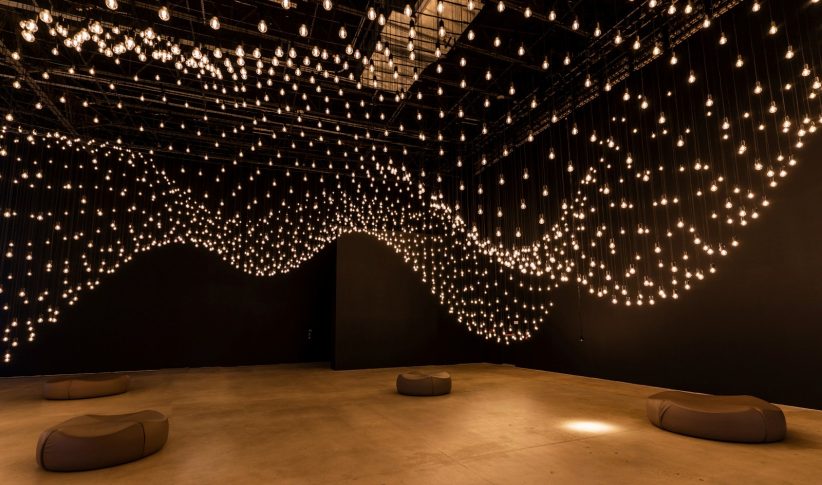
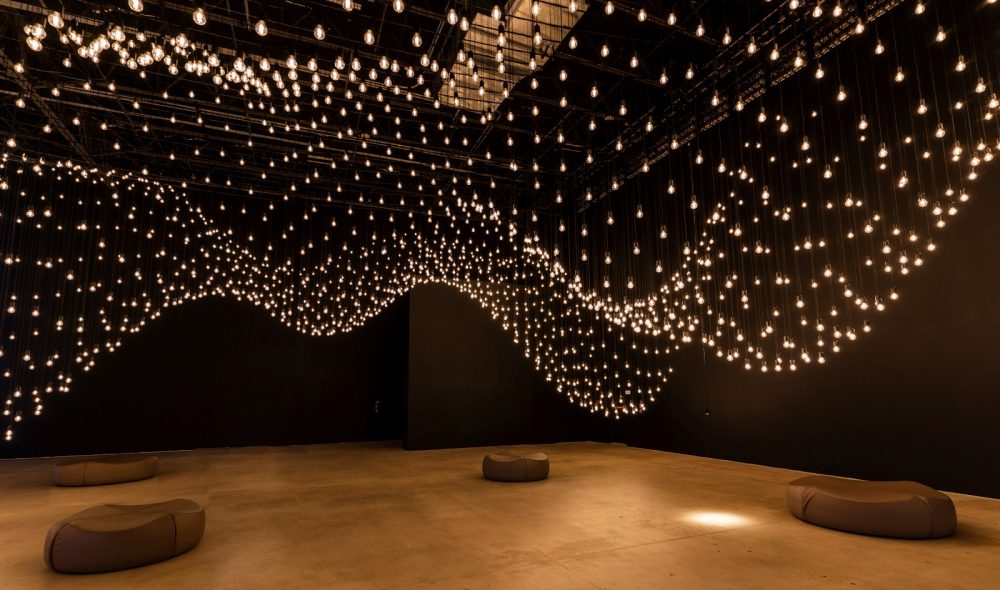
L’artista mexico-canadese Rafael Lozano-Hemmer trasforma qui la biometria in materia estetica. Migliaia di lampadine sospese pulsano al ritmo dei visitatori: il singolo battito, traccia di intimità assoluta, diventa ritmo collettivo e campo relazionale. L’opera non rappresenta: espone. Trasforma il bios in architettura, la presenza in superficie luminosa.
A partire da Michel Foucault, la biopolitica descrive quel regime in cui il potere prende in carico la vita come dato amministrabile. Pulse Topology ne è l’estensione contemporanea: non sottrae dati ma li rende evidenti; non occulta la cattura, la mette in scena. La sorveglianza non è più un’infrastruttura invisibile: diventa visibile, sensibile, estetica.
Dove Gilles Deleuze parlava di “società del controllo” come flusso ininterrotto di monitoraggio, Lozano-Hemmer compie un gesto inverso: restituisce sensibilità a ciò che è ormai puramente numerico. Il dato smette di essere indice amministrativo e si fa evento percettivo. Il corpo non scompare, ma riemerge come frequenza, ritmo, intensità.
L’intimità diventa architettura: il visitatore compie un gesto semplice e rituale – la mano sul sensore – e l’opera lo accoglie trasformando il battito in luce. È l’esatto punto in cui, come suggerirebbe Donna Haraway, l’umano e il tecnologico cessano di essere domini separati e si ricongiungono in un’interfaccia condivisa. Non esiste più il “fuori” della tecnologia: si è dentro la propria stessa traccia.
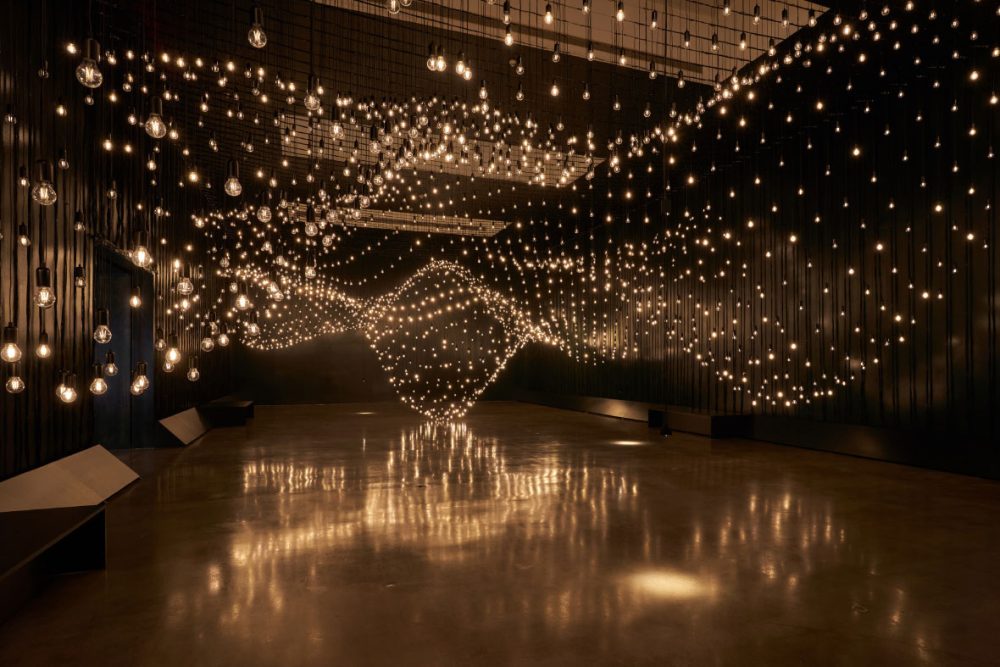
Non c’è gadget né spettacolarizzazione: c’è esposizione. Qui la tecnologia non è ornamento ma atto critico. Pulse Topology non promette futuro: interroga il presente. Trasforma il dato – solitamente estratto, invisibile, privatizzato – in fenomeno tangibile e pubblico. Dove il digitale dissolve, l’installazione restituisce materialità; dove l’algoritmo isola, questa opera riconfigura la presenza come co-esperienza.
Il punto non è più “chi ci misura”, ma: cosa significa essere misurati? Quale forma di soggettività nasce quando l’identità è prima traccia fisiologica che narrazione? In questo senso l’opera non celebra la tecnologia, ma ne disvela la condizione strutturale: siamo già dati, e la biometria è già la grammatica della nostra esistenza sociale.
Pulse Topology esplicita ciò che il mondo digitale rende opaco: che ogni identità contemporanea è un’oscillazione tra bios e informazione. L’arte non compete con la tecnica: la riporta al corpo da cui è estratta. La mostra non promuove un futuro ipertecnologico: mostra il presente che già abitiamo.
Ed è in questo punto che la data art non appare come genere, ma come necessità critica. Quando il battito diventa spazio, ciò che viene restituito allo spettatore non è soltanto l’esperienza, ma la consapevolezza che il dato – lungi dall’essere pura astrazione – è oggi ciò che ci definisce, ci espone e ci rende collettivi. L’opera non registra: rivela.
——————————————————————————————————————–
When the Heartbeat Becomes Space: Rafael Lozano-Hemmer and the Luminous Biopolitics of Pulse Topology
Stepping into Pulse Topology means crossing an invisible threshold: a moment earlier you are a spectator, the next you are a device. Light is no longer the environment, but the consequence – the pulse becomes image, data becomes body, and the body – paradoxically – becomes public. And frankly, when you run a column called Data Art, this is precisely the kind of terrain you get to swim in.
The Mexican-Canadian artist Rafael Lozano-Hemmer turns biometrics into aesthetic matter. Thousands of suspended light bulbs pulse at the rhythm of the visitors: the individual heartbeat, the most intimate physiological trace, becomes a collective tempo and a relational field. The work does not represent: it exposes. It turns the bios into architecture, presence into luminous surface.
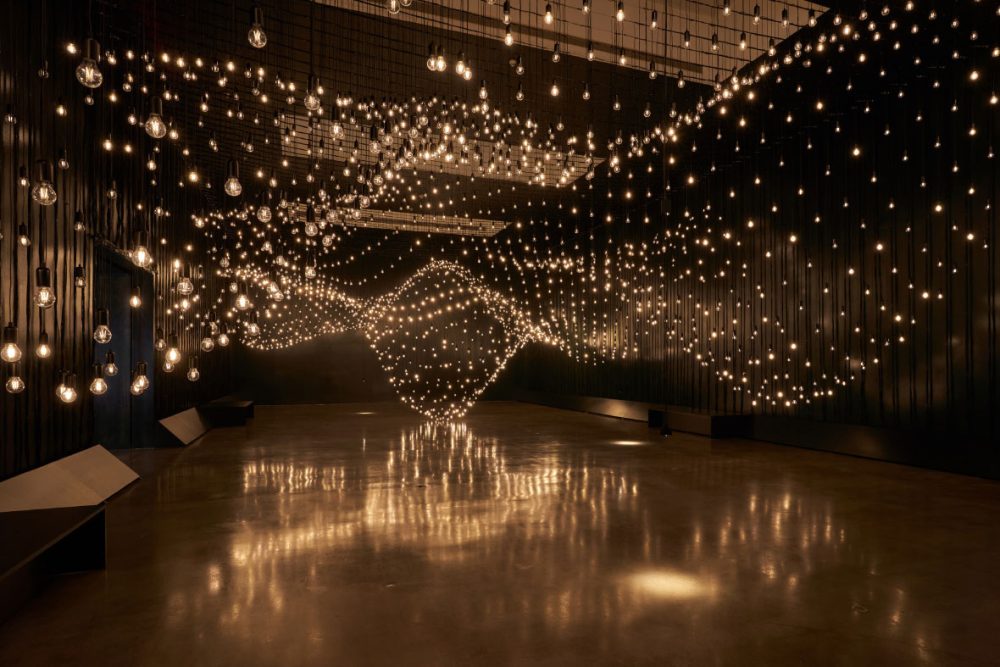
Since Michel Foucault, biopolitics has described the regime in which power takes hold of life as something measurable and administrable. Pulse Topology is its contemporary extension: it does not conceal data extraction, it renders it visible. Surveillance is no longer an invisible infrastructure – it becomes perceptible, embodied, aesthetic.
Where Gilles Deleuze identified the “society of control” as a continuous flow of monitoring, Lozano-Hemmer performs an inverse gesture: he reintroduces sensitivity into what has become strictly numerical. Data ceases to be a bureaucratic index and becomes a perceptual event. The body does not disappear – it re-emerges as frequency, rhythm, intensity.
Intimacy becomes architecture: the visitor performs a simple, quasi-ritual gesture – a hand resting on a sensor — and the work receives it, translating the heartbeat into light. It is precisely the point at which, as Donna Haraway would suggest, the human and the technological cease to be separate spheres and merge into a shared interface. There is no longer an “outside” of technology; one is inside one’s own trace.
There is no gadgetry, no spectacle: there is exposure. Here technology is not an accessory but a critical act. Pulse Topology does not promise the future – it interrogates the present. It transforms data – usually extracted, invisible, privatized – into a tangible and public phenomenon. Where the digital dissolves, the installation restores materiality; where the algorithm isolates, the work reorganizes presence as co-experience.

The question is no longer “who is measuring us?”, but rather: what does it mean to be measured? What form of subjectivity emerges when identity is first a physiological imprint before it is narration? In this sense, the work does not celebrate technology – it unveils its condition. We are already data, and biometrics is already the grammar of our social existence.
Pulse Topology renders explicit what the digital world keeps opaque: that every contemporary identity is a constant oscillation between bios and information. Art does not compete with technology; it returns it to the body from which it is extracted. It does not depict a hyper-technological future – it discloses the present we already inhabit.
And it is precisely here that data art ceases to appear as a genre and becomes a critical necessity. When the heartbeat becomes space, what is returned to the viewer is not merely an experience, but the awareness that data – far from being an abstract field – is today what defines us, exposes us, and renders us collective. The work does not record: it reveals.